
The Strong Giant of the Sea Hides Beneath the Stones
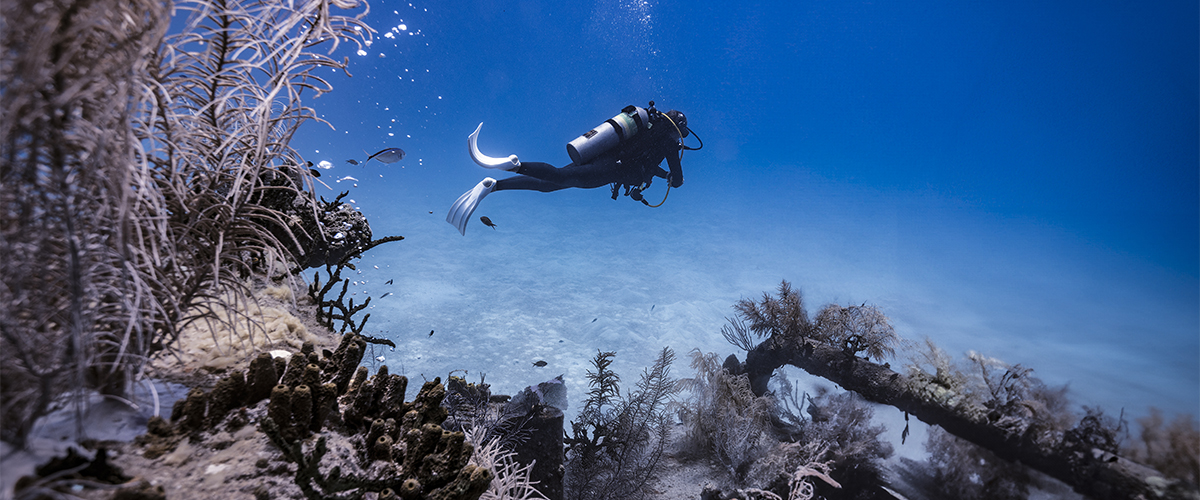
If you have dived in the Little Belt, you may have been lucky enough to encounter one of the area’s most impressive residents. The European lobster (Homarus gammarus) inhabits the rocky reefs and slopes, where it hides in crevices and caves. The Little Belt is one of Denmark’s best places to experience the lobster in its natural surroundings because the strong current conditions promote rich marine life and a healthy seabed.

A Nocturnal Hunter
The lobster is most active at night. During the day, it often remains hidden deep between the stones, with only its long antennae protruding. As darkness falls, it emerges to search for food.
Its diet includes:
- Mussels
- Snails
- Crustaceans
- Small fish
- Carcasses
Thus, the lobster also helps to “clean up” the seabed.
Two Claws with Different Roles
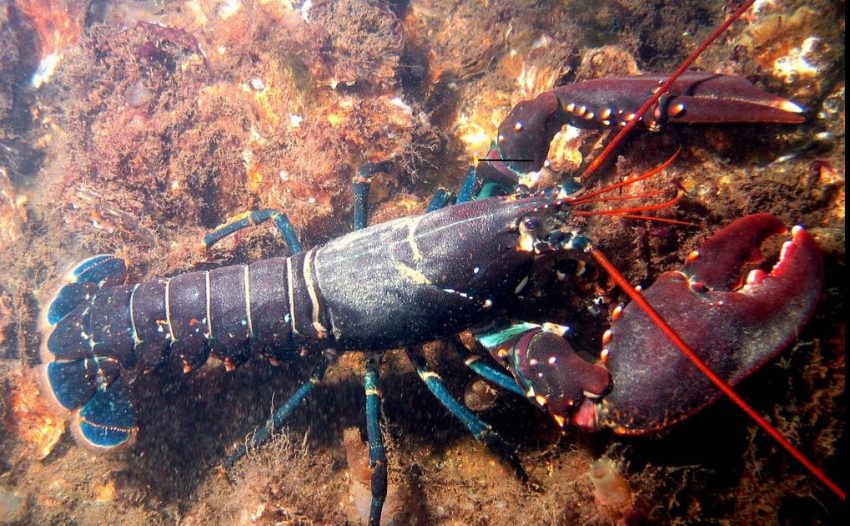
If you see a lobster up close, you will notice that its claws are not the same.
One claw is large and powerful. It is used to crush mussel shells and crabs.
The other claw is narrower and sharper. It acts like a scissors, capable of cutting and holding onto prey.
This makes the lobster an effective hunter.
How Big Can It Get?
The European lobster can grow to:
- About 60 cm long
- Weigh over 5 kg
- Live for many decades under the right conditions
However, most lobsters encountered by divers in the Little Belt are considerably smaller.
Lobsters Grow by Shedding Their Shells
The lobster cannot grow inside its hard shell.
When it becomes too large, it sheds its entire shell and crawls out with a new, soft shell. In the initial days, it is very vulnerable and therefore hides extra well until the new shell hardens.
An Important Species in Danish Waters
The European lobster is found in many places along the Danish coasts, but it thrives especially where there are rocky reefs and plenty of hiding spots. It does not naturally occur in most of the Baltic Sea because the salinity levels are too low.
🦞 10 Fun Facts About Lobsters
🦞 1. The Lobster is Right-Clawed… or Left-Clawed!
Like humans, it has a “favorite claw.” In some, the crushing claw is on the right, while in others it is on the left.
🦞 2. It Shedds Its Entire Armor
When the lobster grows, it sheds its entire shell, including around the eyes, gills, and abdomen.
🦞 3. It Can Grow New Legs
If it loses a leg or a claw, it can slowly grow a new one over several molts.
🦞 4. It Loves Rocky Reefs
The more crevices and large stones, the better the lobster thrives.
🦞 5. It Mostly Works the Night Shift
During the day, it hides. At night, it patrols the seabed in search of food.
🦞 6. It is Surprisingly Strong
A large lobster can crush thick mussel shells with its powerful claw.
🦞 7. It is a Master of Camouflage
Its dark blue color makes it nearly invisible among seaweed and stones.
🦞 9. It Can Sense Water with Its Antennae
The long antennae act as both nose and feelers, helping the lobster find food in the dark.
🦞 10. Finding a Lobster on a Dive is Something Special
Even experienced divers are excited when they spot a lobster poking its head out from its hideout. It is one of those underwater encounters that you won’t forget.
Tips for Divers
The next time you dive in the Little Belt, carefully look under large stones and into crevices at depths of 10 to 30 meters. If you see two long antennae sticking out of a crevice, there is a good chance that a lobster is watching you. Remember to enjoy the experience from a distance so that the creature can remain in its natural shelter.