
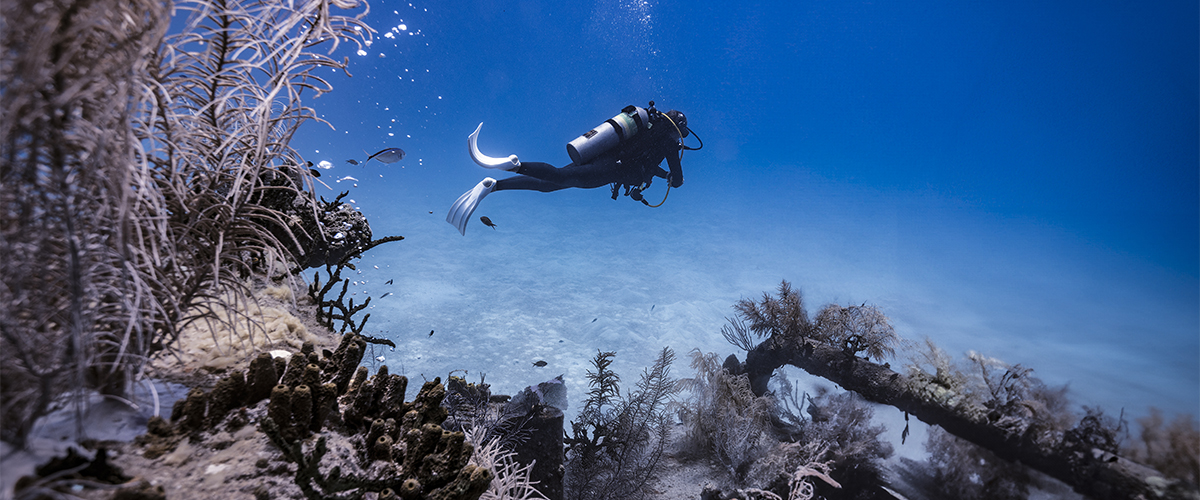

Effective Breathing Under Water Leads to Longer and More Enjoyable Dives
One of the most important skills you can learn as a diver does not relate to equipment or technique. It is all about how you breathe.
A calm and controlled breathing pattern not only makes your dive more relaxing. It also helps you use less air, decreases your energy expenditure, and allows you to make better decisions underwater.
Why is Breathing Different Under Water?
When you dive with scuba gear, the air is much denser than the air you breathe at the surface. This means your respiratory muscles have to work harder to move the air in and out of your lungs.
If you breathe quickly and shallowly, you use more energy, tire faster, and deplete your tank more quickly.
Therefore, we teach all new divers at Diving 2000 to focus on:
- Calm inhalations
- Deep breaths
- Slow exhalations
This creates a more relaxed diving experience and lowers air consumption.
Dead Airspaces – What Does It Mean?
When you breathe, the actual gas exchange occurs only within the lungs. The air present in the mouth, throat, trachea, and regulator does not directly participate in oxygen absorption. These areas are referred to as the dead airspaces.
With each new inhalation, the first air you breathe in will be the air that was left in these airways from the previous exhalation. It contains more carbon dioxide and less oxygen than fresh air.
Moreover, scuba equipment adds a little extra dead airspace because the regulator and mouthpiece also contain air.
If you take small, quick breaths, a larger portion of each breath comes from this dead airspace. The result is that your body has to work harder to get the oxygen it needs.
Deep and calm breaths, on the other hand, mean that a larger portion of each inhalation consists of fresh air, making the breathing more efficient.
A Relaxed Diver Uses Less Air
There is a close connection between breathing and mental calmness.
When you are relaxed, your breathing automatically slows down and becomes deeper. Conversely, a consciously calm breathing pattern can help you maintain composure if you feel stressed or uncertain during a dive.
This provides several benefits:
- Lower air consumption.
- Less strain on the body.
- Better buoyancy control.
- Greater capacity to handle unexpected situations.
Many experienced divers find that good breathing is one of the key elements for safe and enjoyable dives.
If Water Enters the Regulator
Most divers experience at some point that there’s a little water left in the regulator or snorkel after exhaling. This is completely normal and rarely a problem.
With the right technique, you can continue to breathe easily.
Breathe Calmly
If you inhale slowly, the water often remains at the bottom of the mouthpiece while the air passes by and into your lungs. It often helps to look a little downward.
Use Your Tongue as a “Barrier”
Another technique is to place the tip of your tongue behind your front teeth while inhaling. The tongue helps keep the water away from the airflow, allowing you to breathe comfortably. This method can be effectively combined with a slow inhalation.
Cough If Necessary
If a few drops make it past and trigger a cough reflex, the most important thing is to stay calm.
Cough naturally, but make sure to keep the regulator securely in your mouth. Once the coughing is over, simply continue your normal breathing.
Our Best Advice
Good breathing is something that develops with experience. The more relaxed you become in the water, the more natural your breathing will also be.
Therefore, remember these simple rules the next time you dive:
- Breathe slowly and deeply.
- Avoid quick and shallow breaths.
- Stay relaxed and do not stress.
- Accept that a little water in the regulator can be handled calmly.
At Diving 2000, we spend a lot of time teaching our students good breathing habits right from their first dives. This not only provides longer bottom times but also greater comfort, better safety, and far more energy to enjoy life beneath the surface.
See all our diving courses here